-
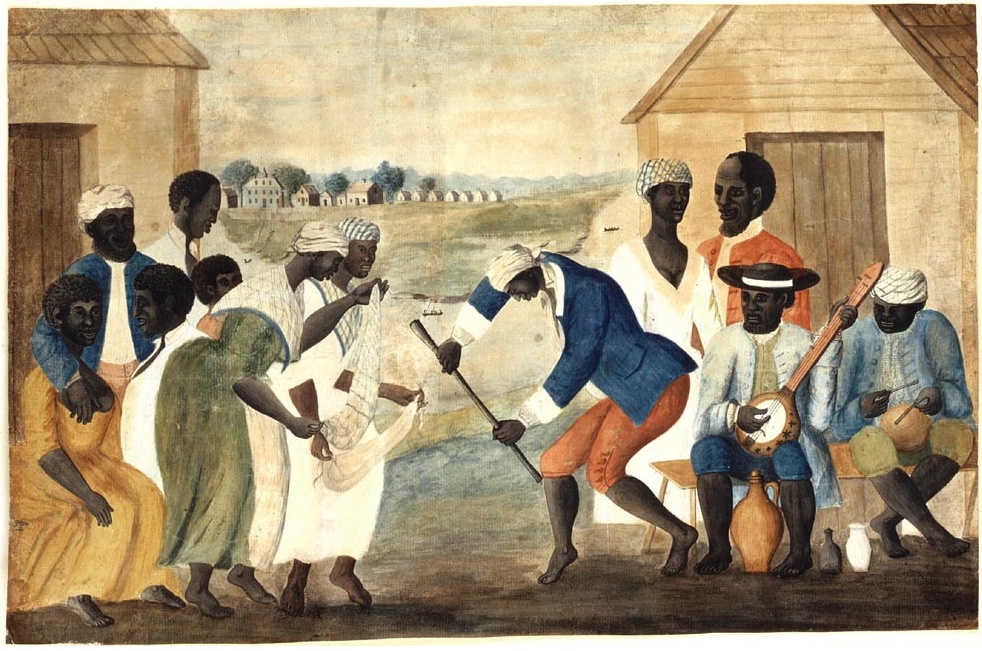
Peter Wessel wrote an excellent essay on jazz, a tad historical and analytical, of the mingling, or lack thereof, and intermingling of cultures and traditions. If music is already considered to be the most universal mode of communication, then jazz would be its lingua franca. Unfortunately, it has become an idiom, a fixed form, in…
-

Petite note de lecture en passant. Rabelais évoque à propos des couleurs de Gargantua, la distinction entre jus gentium et droit naturel (jus naturae) dans Gargantua aux éditions de la Pléiade (pp. 30-31): Et n’est cette signifiance par imposition humaine institué, mais receue par consentement de tout le monde, que les philosophes nomment ius gentium,…
-

Great article in Eurozine published in 2006 by Mikkel Thorup, lecturer at the University of Århus in Denmark, on political cosmopolitanism. It explains well where contemporary cosmopolitanism stands, in between universalism, pluralism, and nationalism: “New cosmopolitanism is therefore critical of what we can call the universalist Left and the nationalist Right.” Still, the article, as…
-
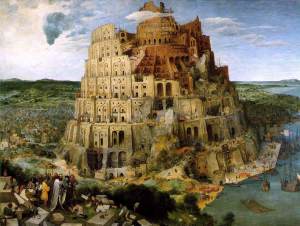
Thank you Peter for commenting on “Polyfonias” and delving into literary analyses. I would like to add to your comment on monolingualism. It seems that today we have forgotten our past when it comes to language. Our past was Babelian (but not in the sense that the myth should serve the construction of a universal…
-

research-proposal2 Here is the research proposal I have elaborated for a 3 years PhD research. All comments and feedback are more than welcomed to refine the project.
-

I went to a concert/poetry reading at the Danish house in Paris, the institution in charge of promoting Danish (not only but mainly) culture in France. Peter Wessel, a Danish born poet who lived in France, Spain, California, and who knows where else, was performing with Mark Solborg, a Danish/Argentinian composer, guitarist and musician, and…
-

Excellent article on Humboldt and cosmopolitanism, arguing that the ‘Weltbürger’ was a scientist and the scientist a ‘Weltbürger.’ This reminds me of my own research on the use of the term cosmopolitan and citizen of the world in eighteenth century France. Very often people would use it as a moniker to claim a position of…
-
My master’s thesis “Element of an Archaeology of Cosmopolitanism in Western Political Thought: A Return to the French Enlightenment” is now available for download on the Danish website of the Department of Political Science, Centre for European Politics, University of Copenhagen. Using Foucault’s archaeology and problematisation, coupled with the Cambridge school’s contextualism, I investigate the…
-

Work Cited Beck, Ulrich. The Cosmopolitan Vision. Cambridge: Polity Press, 2006. Summary of the Introduction The introduction opens with the opposition cosmopolitanism/patriotism. Today this old debate is over because the human condition has become cosmopolitan (2) Cosmopolitanism is no more a controversial rational idea. The “cosmopolitan outlook”: “Global sense, a sense of boundarylessness. An everyday,…
-
Work Cited Held, David. “Culture and Political Community: National, Global, and Cosmopolitan.” In Conceiving Cosmopolitanism: Theory, Context, Practice, edited by Steven Vertovec and Robin Cohen, 48-58. Oxford: Oxford University Press, 2002. 1. Historical backdrop The globalisation of culture has a long history. The expansion of great religions, pre-modern empires, etc. “For most human history, these…
 Frank Ejby Poulsen